From the “Oh, the Irony” category, the very AI revolution that many thought would eliminate blue-collar labor is actually creating one of the biggest labor shortages in modern history.
Huh?
For decades they told an entire generation that the future belonged to people sitting behind computer screens, pushing paper around in climate-controlled offices, while anyone working with their hands was somehow a failure.
Not Anymore.
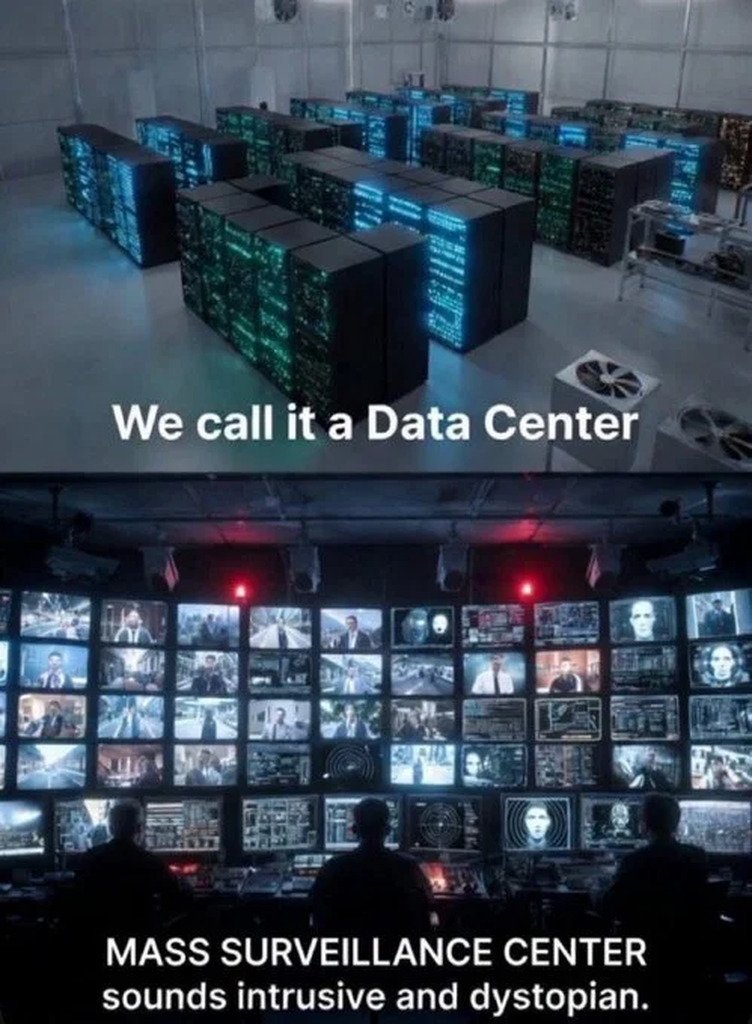
Artificial intelligence requires physical infrastructure everywhere, because these systems do not magically float in the clouds.
They need giant data centers, electrical grids, transformers, cooling systems, steel, copper, pipelines, construction crews, semiconductor plants, and endless maintenance.
And, most importantly, somebody actually has to build all of it.
Duuhhhh!
Even the Presstitutes are finally starting to admit that white-collar hiring is slowing while skilled trade hiring is exploding.
The office jobs everyone chased for decades are suddenly becoming unstable while electricians, welders, HVAC technicians, elevator mechanics, and industrial workers cannot be hired fast enough.
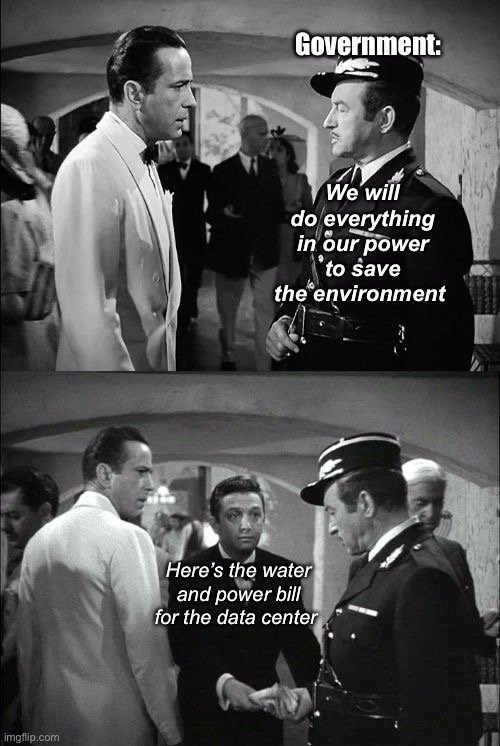
And because of AI, utilities are expected to spend roughly $1.1 trillion modernizing America’s electrical grid over the next several years because AI Data systems are consuming extraordinary amounts of power.
Adding gasoline to the Irony fire, Reuters reported the United States may need more than half a million additional workers tied directly to energy infrastructure and transmission projects by 2030.
It’s only four years away but at the same time, nearly half the current skilled labor force is approaching retirement age.
Labor Shortages
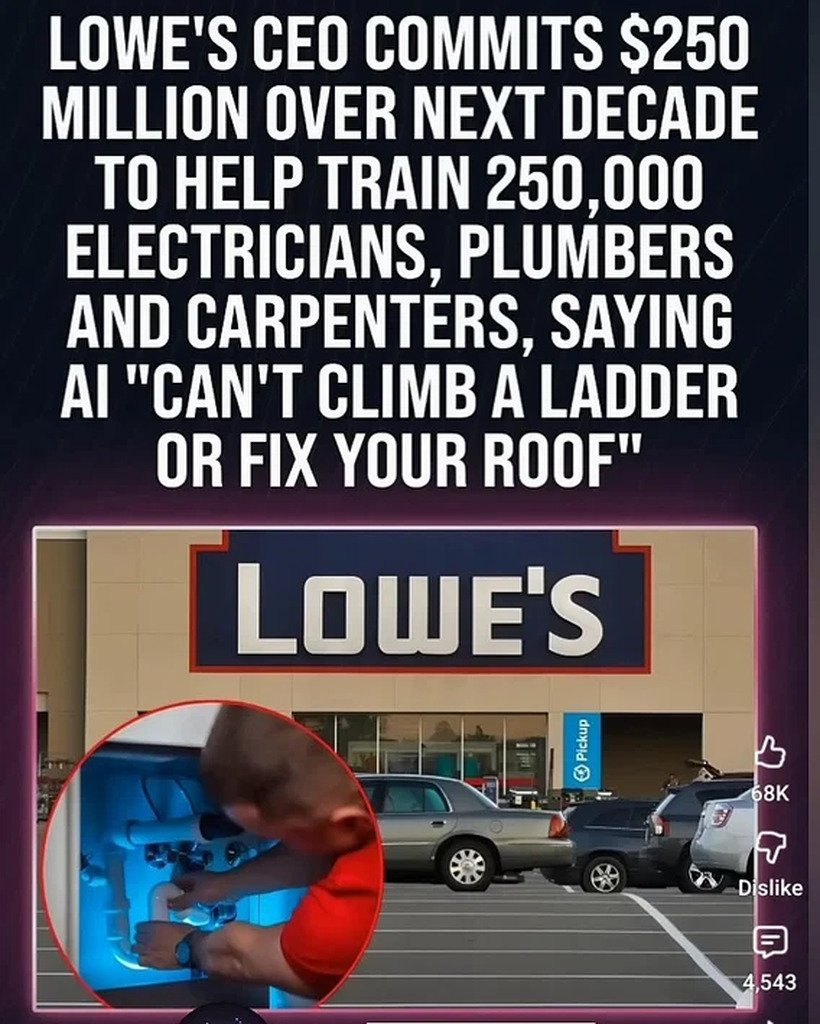
The CEO of Lowes is putting his money where his mouth is to help train carpenters, plumbers, electricians, etc. to capitalize on the boom in skilled labor jobs.
Even NVIDIA CEO Jensen Huang came right out and said electricians, plumbers, technicians, and construction workers may dominate the next labor cycle because AI itself depends entirely on real-world infrastructure.
He called this the beginning of a new industrial revolution.
And he is correct.
Because:
AI cannot climb utility poles in the middle of a storm.
It cannot wire a semiconductor plant.
It cannot repair industrial cooling systems. It cannot install transformers or build transmission lines.
Civilization still runs on physical systems and somebody has to maintain them.
Electricians working on major AI infrastructure projects are increasingly earning six figures once overtime is included.
Welders, linemen, industrial mechanics, and specialized construction crews are suddenly becoming some of the most valuable workers in the economy.
And on and on it goes.
So, if you haven’t figured it out yet, young people are beginning to realize that practical skills tied to energy, manufacturing, transportation, construction, and infrastructure may offer far greater security than unstable corporate office jobs increasingly threatened by automation.
Instead of chasing the AI stocks (starting to resemble the Dotcom bubble) learn what industries and stocks will profit the most from AI’s creation of labor shortages (HERE).
Share this with a friend…especially if they’re struggling with debt for student loans and can’t get a job. They’ll thank YOU later.
And tell them:
We’re Not Just About Finance
But we use finance to give you hope.
“And you shall know the truth, and the truth shall make you free.”