
For those of you who don’t remember the Cuban Missile Crisis, here’s a short recap:
What we were told…
The official story goes like this: Khrushchev blinked. Kennedy stood firm. The Soviets backed down and removed their missiles from Cuba.
American resolve triumphed. The Russians were humiliated. End of story.
This narrative served multiple purposes: It made Kennedy look strong. It justified his hardline stance. It humiliated the Soviets publicly, which satisfied American pride.
And it concealed the actual bargain that ended the crisis.
But what you were NOT told was how…
It Was a Calculated Trade
Kennedy absolutely agreed to remove American Jupiter missiles from Turkey as part of the deal to end the crisis. This wasn’t a minor concession—it was the core of the settlement.
The Soviets got exactly what they wanted strategically, while accepting public humiliation to avoid nuclear war.
Ironically (or NOT) Trump’s action this past weekend was to prevent the same type of confrontation.
We know that Trump did directly warn Cuba… and this is all about accepting missiles from Russia.
This was NOT about oil alone.
Oil is the side-bet.
It also displaces the Middle East in a crisis.
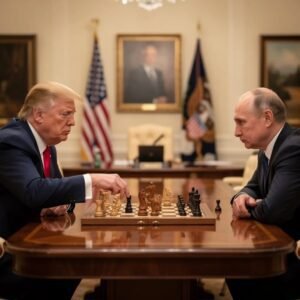
Simply stated, Trump is playing chess with Putin.
And if you cannot connect the dots, then you should put your mask on and go for a drive with the windows up to avoid COVID in the air.
Ironically (or NOT)) 63 years after the Cuban Missile Crisis, Trump’s move is to prevent Putin from dragging in the US to help stop the insanity of the EU and NATO.
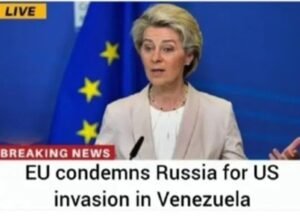
And if Trump does NOT exit NATO, then missiles in Cuba and or Venezuela would be checkmate.
One other major part of this chess game (that the Presstitutes won’t mention) is how China is owed, by Venezuela, at least $20 billion in loans established before 2017… backed by oil delivery.
It may be even higher than $20 billion.
As a result, their relationship has shifted from expansion to damage control.
However, Russia’s engagement with Venezuela has followed different patterns than China’s, emphasizing military cooperation alongside energy sector involvement.
Why?
Because Russia does not need their oil.
And where China provided infrastructure loans, Russia sold weapons systems.
From 2005, Venezuela purchased more than $4 billion worth of arms from Russia. These sales included fighter aircraft, helicopters, armored vehicles, and air defense systems, transforming Venezuela’s military from American-equipped forces to Russian-supplied ones.
Chávez – and later Maduro – positioned Venezuela as Russia’s foothold in the Western Hemisphere, allowing military exercises and bomber flights that signaled Moscow’s reach into America’s traditional sphere of influence.
And Russia helped Venezuela circumvent U.S. sanctions by facilitating oil exports through complex shipping arrangements and providing technical expertise to maintain declining production.
So, it remains to be seen if Trump/Rubio cuts off the energy flow to China.
This is again only one reason in a complex strategic geopolitical move that is beyond the headlines right now.
Stay tuned.
And read more about how this develops in our upcoming January newsletter (HERE).
Share this with a friend…especially if they remember the Cuban Missile Crisis. They’ll thank YOU later.
And tell them:
We’re Not Just About Finance
But we use finance to give you hope.
“And you shall know the truth, and the truth shall make you free.”
~John 8:32~